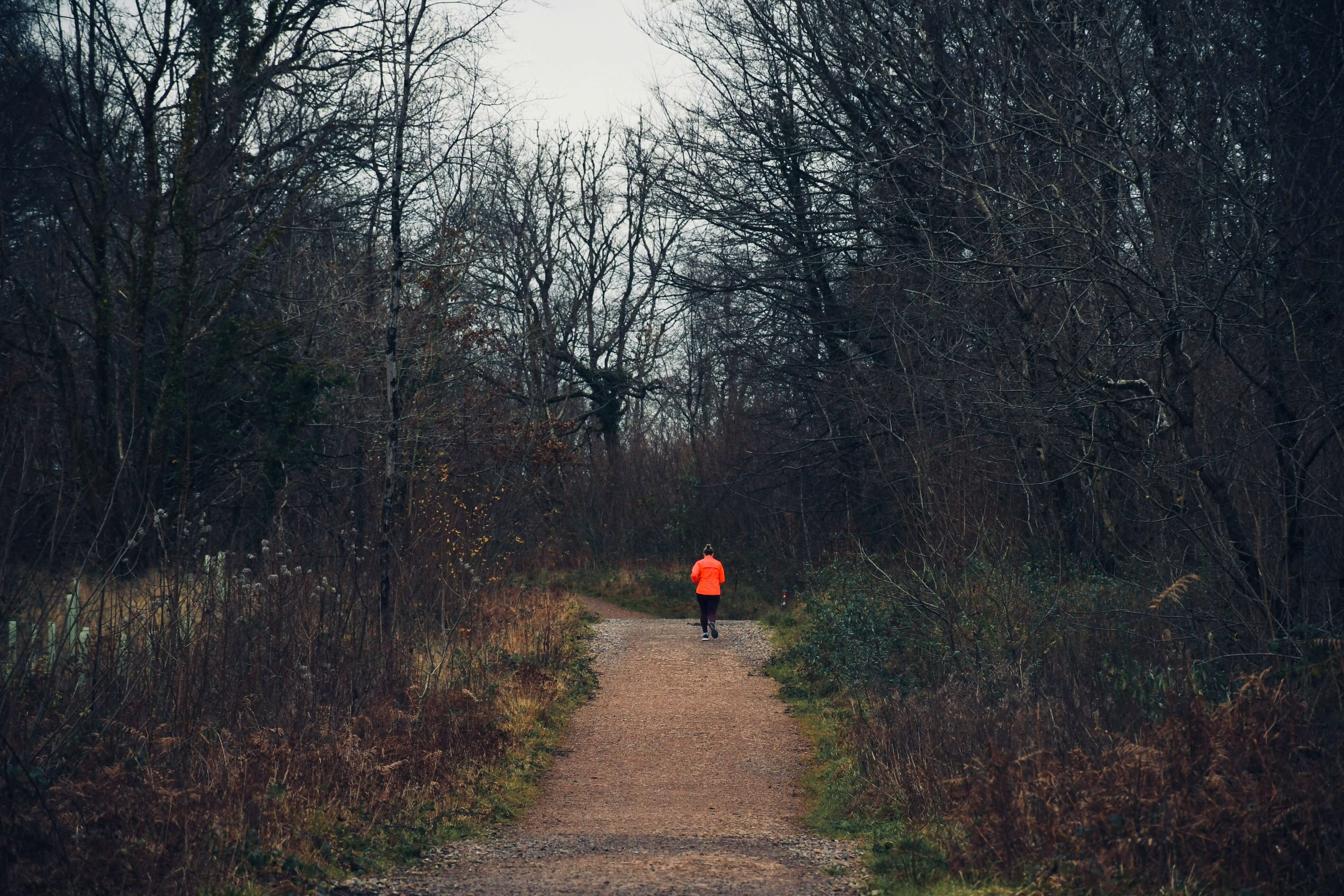
The gym is convenient. The treadmill is predictable. The controlled environment removes variables — no weather, no terrain, no distractions. For millions of people, indoor exercise is the default, the practical choice, the one that fits the schedule. And it is genuinely valuable. But if indoor exercise is all you're doing, you may be missing a dimension of physical and psychological benefit that no amount of equipment, mirrors, or air conditioning can replicate.
The science of outdoor exercise — what researchers now call "green exercise" — has expanded dramatically over the last two decades, and what it reveals is not a minor difference in experience but a fundamentally different physiological and neurological response to movement that happens when the human body does what it evolved to do: move through natural environments.
Here is what actually changes — system by system — when you take your workout outside.
Your brain responds completely differently to outdoor movement.
This is where the most striking and consistent findings in outdoor exercise research live — and where the difference between a treadmill run and a trail run is most profound, even when the distance, speed, and effort are identical.
When you exercise outdoors, your brain engages in what neuroscientists call "involuntary attention" — a form of effortless, flowing awareness that is triggered by natural stimuli: changing light, varied terrain, birdsong, wind, the unpredictability of a living environment. This type of attention requires no executive function — it doesn't deplete your cognitive resources. It restores them.
Indoor exercise, by contrast, requires "directed attention" — the deliberate, effortful focus needed to maintain pace on a treadmill, count reps, watch a screen, or sustain motivation in a static, controlled environment. Directed attention depletes over time — it is the same cognitive resource you use for work, decision-making, and resisting distraction. A long indoor workout can leave you feeling simultaneously physically accomplished and mentally drained.
This distinction is the foundation of "Attention Restoration Theory," developed by environmental psychologists Rachel and Stephen Kaplan, which has now accumulated decades of supporting research. The consistent finding: natural environments restore depleted cognitive resources in ways that built environments — including gyms — simply do not. A 2008 study published in Psychological Science found that a 20-minute walk in a natural environment improved attention and working memory scores in children with ADHD to a degree comparable to stimulant medication. The effect size was not trivial. It was clinically significant.
In adults without ADHD, the cognitive restoration effects of outdoor exercise are equally well-documented. Studies comparing indoor and outdoor exercise at matched intensities consistently show that outdoor exercisers perform better on post-exercise cognitive tasks, report lower mental fatigue, and exhibit reduced activity in the prefrontal cortex — the brain region associated with self-referential thinking, rumination, and the kind of repetitive negative thought patterns that underlie anxiety and low mood.
Your mood improves more — measurably, immediately, and more durably.
Both indoor and outdoor exercise trigger endorphin and serotonin release — but the outdoor environment adds a layer of neurochemical response that indoor exercise cannot access. Natural light exposure during outdoor exercise directly stimulates serotonin production through pathways independent of physical activity. The combination of exercise-induced serotonin with light-triggered serotonin produces a mood elevation that is measurably greater than either alone.
A landmark meta-analysis published in the journal Environmental Science and Technology, synthesizing data from eleven studies and over 800 participants, found that just five minutes of outdoor exercise in a natural setting produced significant improvements in self-esteem and mood — with the presence of water in the environment amplifying the effect most strongly. Five minutes. The effect was not subtle — it was statistically significant and immediately felt.
Longer outdoor exercise sessions show even more pronounced effects. A Stanford University study using brain imaging found that participants who walked for 90 minutes in a natural environment showed significantly reduced activity in the subgenual prefrontal cortex — the brain region most strongly associated with rumination — compared to those who walked the same distance in an urban environment. The outdoor walkers also reported significantly lower scores on measures of negative, repetitive thinking. The outdoor environment didn't just make them feel better. It changed the activity pattern of their brain.
Your vitamin D synthesis activates — something no indoor workout can do.
This is one of the most practically significant differences between indoor and outdoor exercise, and one of the most straightforward. As discussed in detail in our immunity article, vitamin D — produced through skin exposure to UVB radiation from sunlight — is one of the most critically deficient nutrients in modern populations and one of the most important for immune function, bone health, hormonal balance, mood regulation, and dozens of other physiological processes.
An indoor gym, however well-lit, provides zero vitamin D synthesis. Exercise outdoors — even on a mildly overcast day — provides meaningful UVB exposure, particularly between 10am and 3pm when UVB angles are sufficient for synthesis. A 20 to 30-minute outdoor workout in adequate sunlight can produce a meaningful portion of your daily vitamin D needs, depending on skin tone, season, and latitude. For people who spend most of their working day indoors, outdoor exercise may be their primary opportunity for the natural vitamin D synthesis that their biology is designed to depend on.
Your cardiovascular system works harder — and adapts more broadly.
Outdoor exercise — particularly running, cycling, or hiking on natural terrain — places demands on the cardiovascular system that indoor exercise often doesn't. Variable terrain requires constant micro-adjustments in effort, activating different muscle groups, varying heart rate more dynamically, and placing greater demand on proprioception — the body's sense of its own position and movement in space.
Running on a treadmill, the belt assists foot propulsion, reducing the energy cost of each stride by approximately 1 to 5% compared to outdoor running at the same speed. This is not dramatic, but it is meaningful over time — outdoor running at an equivalent perceived effort consistently produces higher actual energy expenditure, greater cardiovascular demand, and broader muscular activation than treadmill running.
Cycling and hiking outdoors involve wind resistance, elevation changes, and surface variability that stationary cycling and flat treadmill walking cannot replicate. These variables challenge the cardiovascular system more dynamically, produce greater caloric expenditure for the same subjective effort, and develop a more comprehensive functional fitness — the kind of physical capacity that translates to real-world movement demands rather than just gym-based performance.
Your stress hormones drop more significantly outdoors.
Exercise of any kind reduces cortisol over time — one of its most important health benefits. But outdoor exercise produces a more pronounced and more sustained cortisol reduction than equivalent indoor exercise, through a mechanism that goes beyond physical activity itself.
Natural environments — parks, forests, trails, coastlines, even urban green spaces — activate the parasympathetic nervous system through sensory pathways that are independent of movement. The sounds, sights, and air quality of natural settings trigger a physiological relaxation response that is measurable in cortisol levels, heart rate variability, blood pressure, and skin conductance. When this environmental stress-reduction effect is combined with the cortisol-lowering effect of moderate exercise, the result is a more complete stress recovery than either can produce alone.
Japanese researchers studying Shinrin-yoku — the practice of forest bathing — have documented these effects extensively. Participants who walked in forest environments showed cortisol levels 12% lower, heart rate 6% lower, and blood pressure measurably reduced compared to those walking equivalent distances in urban environments. The trees themselves — specifically the phytoncides they emit, volatile organic compounds with antimicrobial and physiological effects — appear to directly reduce stress hormone levels through inhalation, independent of exercise or scenery.
Your sleep quality improves more after outdoor exercise.
Natural light exposure during outdoor exercise has a direct and clinically significant effect on sleep quality — one that indoor exercise, even in a bright gym, cannot replicate. As discussed in our sleep schedule article, the circadian rhythm is primarily regulated by natural light exposure. Morning or midday outdoor exercise provides the bright-light signal that anchors the circadian clock, strengthening the melatonin release that occurs 12 to 16 hours later and producing deeper, more restorative sleep.
Studies comparing sleep quality in people who exercise indoors versus outdoors consistently find that outdoor exercisers fall asleep faster, spend more time in deep sleep, and report higher sleep quality scores — even when controlling for exercise intensity, duration, and total daily physical activity.
Your immune system gets a compounded benefit.
Outdoor exercise in natural environments combines three independently powerful immune-supporting inputs simultaneously: moderate physical activity, which enhances immune surveillance; natural light exposure, which supports vitamin D synthesis; and phytoncide inhalation and natural sensory inputs, which reduce cortisol and support the parasympathetic state that enables immune consolidation.
Research on forest bathing specifically has documented significant increases in natural killer cell activity — lasting for up to 30 days after a single multi-day forest exposure — attributed primarily to phytoncide inhalation. The immune-boosting effect of time in natural environments is not marginal. It is substantial, measurable, and far more durable than the short-term immune fluctuations produced by a single indoor workout.
What indoor exercise does better — and why it still matters.
To be clear: indoor exercise is not inferior — it is different. And there are dimensions of physical fitness that indoor training handles exceptionally well.
Resistance training with weights, cables, and machines — the kind of progressive overload training that builds muscle mass, bone density, and functional strength — is most effectively and safely done indoors with proper equipment. The controlled environment allows precise load management, bilateral symmetry training, and the kind of isolation work that is difficult to replicate outdoors.
Indoor exercise is also more accessible for people with mobility limitations, those in extreme weather conditions, those managing certain medical conditions, and those whose schedules make precise timing essential. A 6am treadmill session in winter delivers real cardiovascular benefit that waiting for favorable outdoor conditions would deny.
High-intensity interval training indoors allows precise control of work and rest periods, heart rate zones, and performance metrics that outdoor training makes more variable and harder to track.
The honest conclusion: indoor and outdoor exercise are not competitors. They are complements. The evidence-backed ideal is a training practice that includes both — using indoor sessions for the structured, progressive, equipment-dependent training that builds a foundation of strength and fitness, and outdoor sessions for the neurological restoration, mood enhancement, vitamin D synthesis, circadian anchoring, and immune-boosting effects that no indoor environment can replicate.
Practical strategies for getting more of both.
Run or walk outside for at least two of your weekly exercise sessions — even if other sessions are gym-based. Prioritize morning outdoor sessions when possible — the light exposure compounds the circadian and mood benefits with the exercise benefits simultaneously. On gym days, walk or cycle to the gym rather than driving — even 10 minutes of outdoor movement bookending an indoor session adds meaningful light exposure and green exercise benefit.
If your outdoor options are limited, even a park bench, a garden, a balcony, or a rooftop adds meaningful benefit over a purely indoor session. The research on green exercise shows that even partial natural exposure — urban parks, tree-lined streets, water features — produces measurable physiological effects. Perfection is not required. Direction is.
Tracking your outdoor movement — where Rhythm makes the difference.
One of the most common barriers to outdoor exercise isn't motivation — it's the lack of a visible structure that makes outdoor sessions feel as purposeful and rewarding as gym sessions. The gym has a scoreboard: weights lifted, reps counted, machines logged. Outdoor movement can feel untracked, unrecorded, and therefore somehow less real.
This is precisely where Rhythm transforms the outdoor exercise experience — and it's the feature set of the app that feels most naturally designed for exactly this purpose. Rhythm's Exploration Session feature uses your device's GPS to trace your outdoor route in real time — whether you're running, walking, cycling, or hiking — rendering your path on an interactive map alongside your distance, pace, and duration. Seeing your route mapped after a run or hike makes the session feel concrete, accomplished, and worth repeating. It turns an abstract outdoor workout into a visible record of somewhere you went and something you did.
The daily step counter provides the ambient outdoor movement tracking that shows you not just your dedicated exercise sessions but the full picture of how much you're actually moving through the day. Combined with the Outdoor Time ritual in Rhythm's Daily Ritual system — a one-tap daily check-in that logs your commitment to getting outside — the app builds a complete picture of your relationship with outdoor movement over time.
And as your outdoor sessions accumulate, your XP grows, your streak builds, and the milestone badge system gives you the kind of landmark rewards that make the commitment to exercising outside feel like a progression rather than just a routine. The 15 unlockable badges provide the long-arc motivation that keeps outdoor exercise from feeling like something you do when the weather is perfect and skipping when it isn't.
What makes Rhythm particularly powerful in the context of outdoor versus indoor exercise is that it doesn't treat them differently — it tracks all movement, rewards all consistency, and builds the kind of daily accountability that makes the decision to go outside feel like the continuation of something meaningful rather than the start of something effortful.
Practical Tip: This week, take one workout you would normally do indoors — a walk, a run, a light cardio session — and do it outside instead. Same duration, same effort. Then open Rhythm, start an Exploration Session before you begin, and watch your route trace in real time. When you finish, notice how you feel compared to an equivalent indoor session — your mood, your mental clarity, your stress level. The difference will be immediate and unmistakable. Then build that outdoor session into your weekly ritual, log it in Rhythm, and let your streak do the work of making it permanent.